.02HzThaumatrope : : centralUnit_03 [2004]
As a twist on the classic persistence-of-vision magic behind animation, consider this: what becomes of an optical toy when it isn’t spun fast enough—and its central illusion begins to fade?
At that slowed tempo, the work’s purpose flips. The thaumatrope is built to resolve contradiction—two opposing sides fused into one coherent image—yet here it lingers in the unresolved space between them. What you’re left with isn’t a single, satisfying visual fact, but a kind of negotiated experience: part perception, part inference, part patience.
As the device’s phenomenological “payoff” recedes into the background of the techno-aesthetic—motor, mechanism, rigging, friction—its meaning shifts. The viewer is no longer simply receiving an illusion; they’re watching the conditions that produce illusion, and noticing how quickly “magic” turns back into “apparatus.”
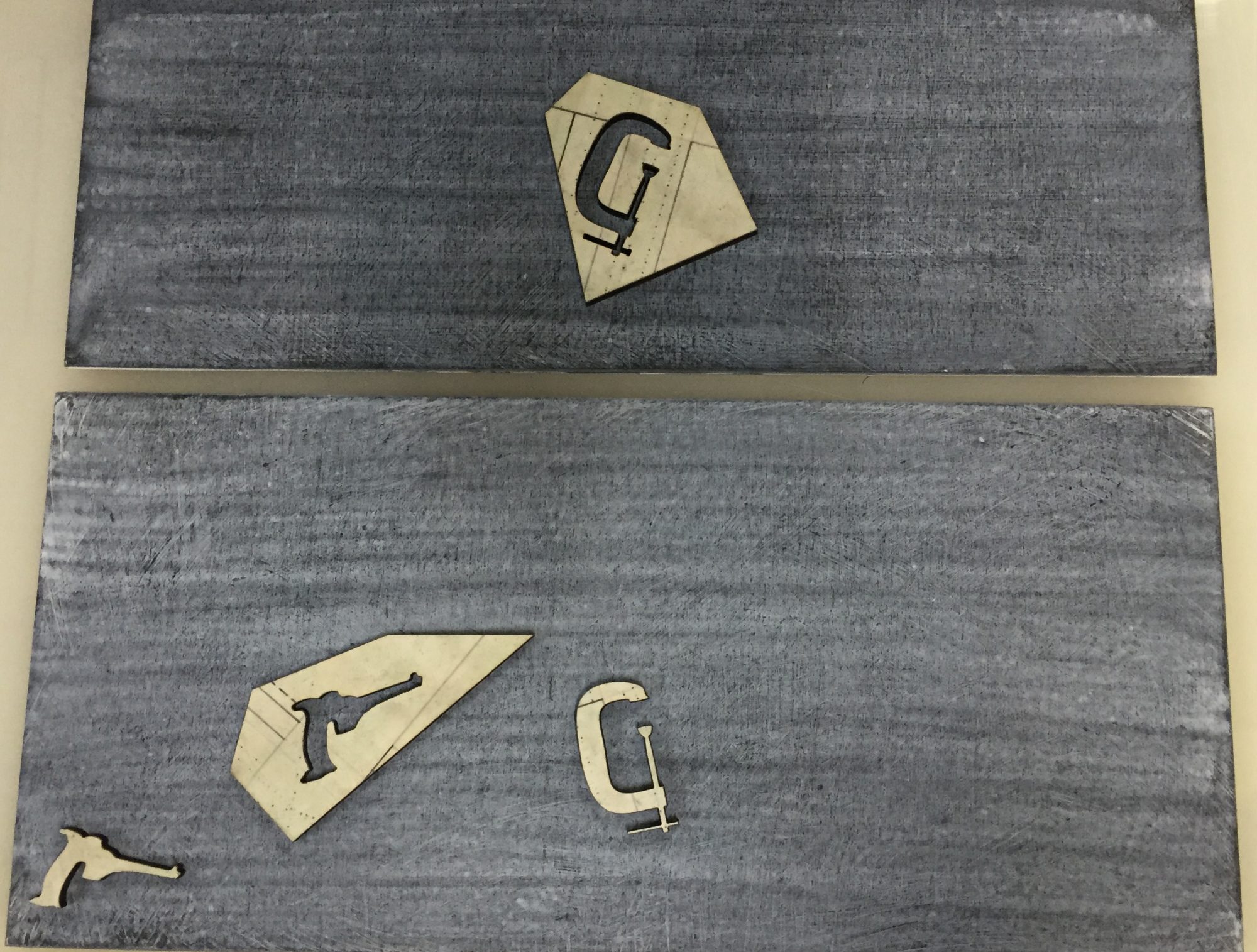
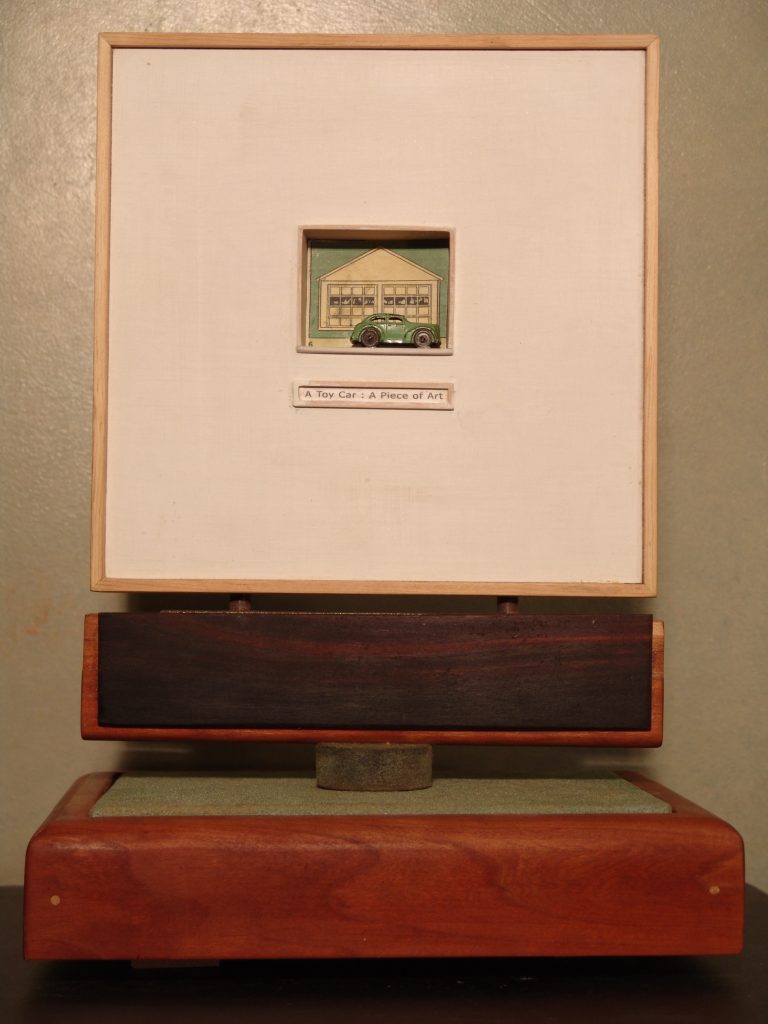
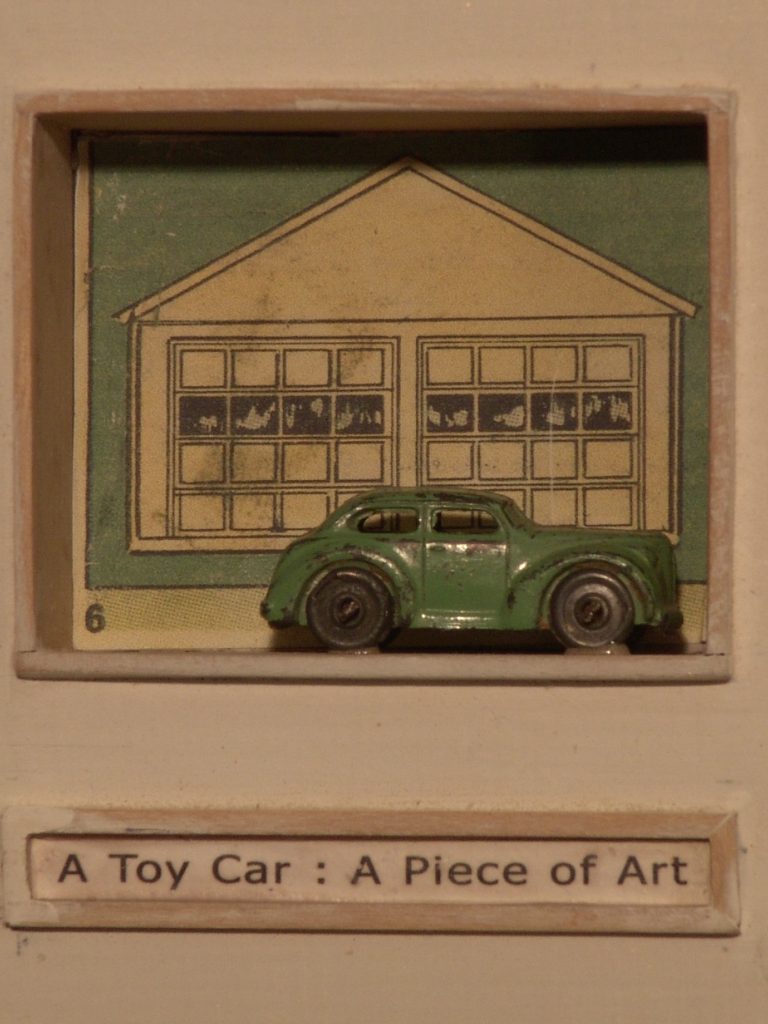
That contradiction is sharpened by the platter’s mismatch in dimensional language. One face reads as essentially two-dimensional; the other pushes forward as bas-relief, 3D. They don’t blend cleanly—they argue. And in that argument, the mind has to do the real work: to mentally map the missing intermix, to imagine the smooth composite that the object promises but withholds.
So the question becomes less What does it show? and more What does it ask of you? If you accept the slow failure—if you let the seam stay visible—you may find a different kind of satisfaction: not the clean fusion of opposites, but the felt tension between them.
And somewhere beyond that threshold—if/when the spin reaches the requisite 12 Hz—another contradiction awaits: the sudden reappearance of coherence. A “holographic” analog snaps into place, and the piece becomes what it always threatened to be.
Until then, it remains deliberately in-between: an optical toy that behaves like a philosophical device.
Scale: (Approx.) 14”h x 12.5”w x 12.5”d