microMemes [2015-2017]
Welcome—this is a game system composed of many interconnected elements, thoughtfully designed to operate under a droit de suite system (DDSS) and introduced through an initial art auction.
Here’s the curatorial idea: once the project is launched, each work’s trading history remains evergreen—always attached to the DDSS terms, in perpetuity. Transactions are tracked with cloud-monitored, authenticated records, making the provenance of each exchange available for transparent review.
This approach gently rebalances the traditional politics and currency of auction-house transactional privacy (whether personal, public, or corporate). Instead of opacity by default, the system dynamically “tunes” the level of visibility that keeps the game fair and legible across buyers, sellers, traders, and advisors. Every collector’s game elements are serially registered, and their exchange-ledger data is publicly reviewable—so the story of movement and value stays part of the work’s living context.
A note from the “age problem” (and why it’s intentional)
One of the work’s quieter provocations is how its surface refuses to settle into a single, stable time.
The aesthetic deliberately cultivates a kind of historical stutter: it can read as freshly fabricated and mysteriously inherited; as a clean contemporary system and as an artifact that has already been handled, archived, and recirculated. That peculiar confusion about age isn’t a mistake—it’s the point.
In a market that often treats “patina” as proof, and “newness” as suspicion (or vice versa), the piece stages an affectionate, critical mismatch between what we see and what we assume. By making age feel uncertain—almost performative—it invites viewers to notice how quickly authenticity gets conflated with surface cues, and how readily value can hitch itself to the optics of “history.”
Project Elements (DDSS implemented):
The full droit de suite implemented project includes:
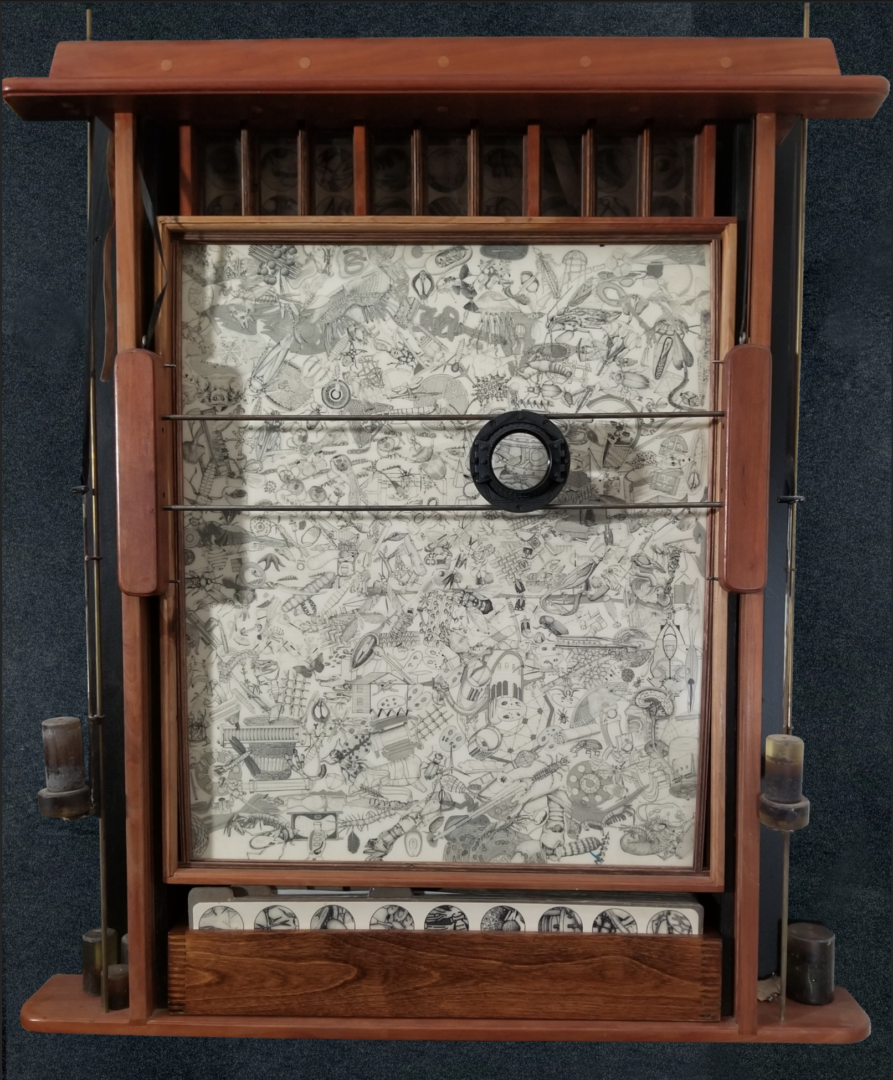
A) scopingRack: Materials: Archival honeycomb board, cherry wood, paper, UV-protected matte medium, acrylic, glass.
Dimensions: 30.5”L x 5”W x 37”H
B) scopeTokens:(multiple): Materials: Paper prints, resin, copper tubing
Dimensions: 1.625” Dia.
C) tokenBoxes: Materials: Wood, paper, flocking, acrylic, shellac, varnish.
Dimensions: Various
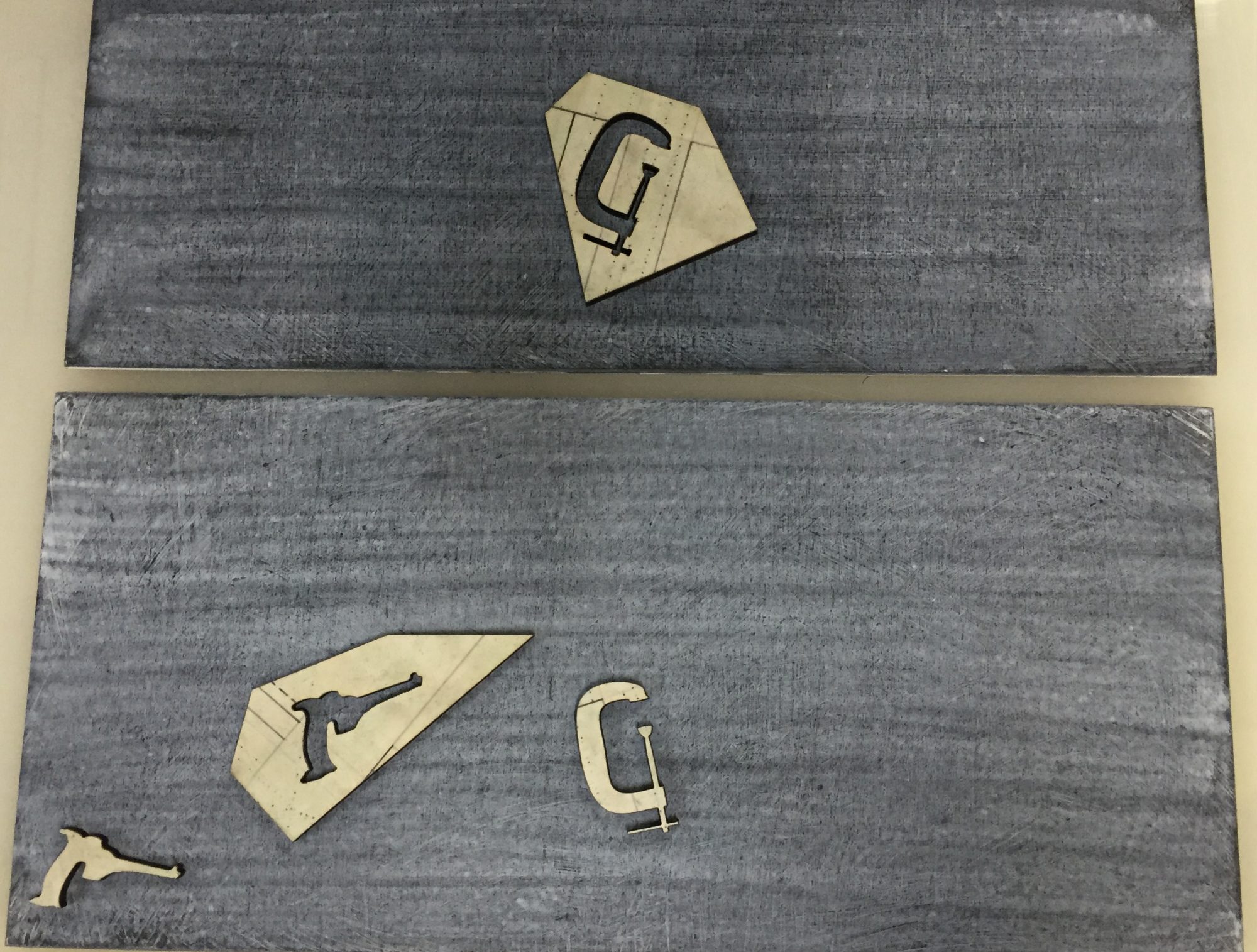
D) challengeTableaux (14): Materials: MDF, inkjet print paper, acrylics, UV-protected matte medium.
Dimensions: (Each) 18”L x 4”W x .25”D
E) tableauxHolds: Materials: Wood, shellac.
Dimensions: 9.25”L x 3.25”W x 4.5”H
f) auxiliaryWeights: Material: Resin, pigments, copper dust, iron rust
Dimensions: ~2.75″H 1.125″ Dia.