diatomicDials[diptych]: [Module_05E] + [Module_28B] [2018]
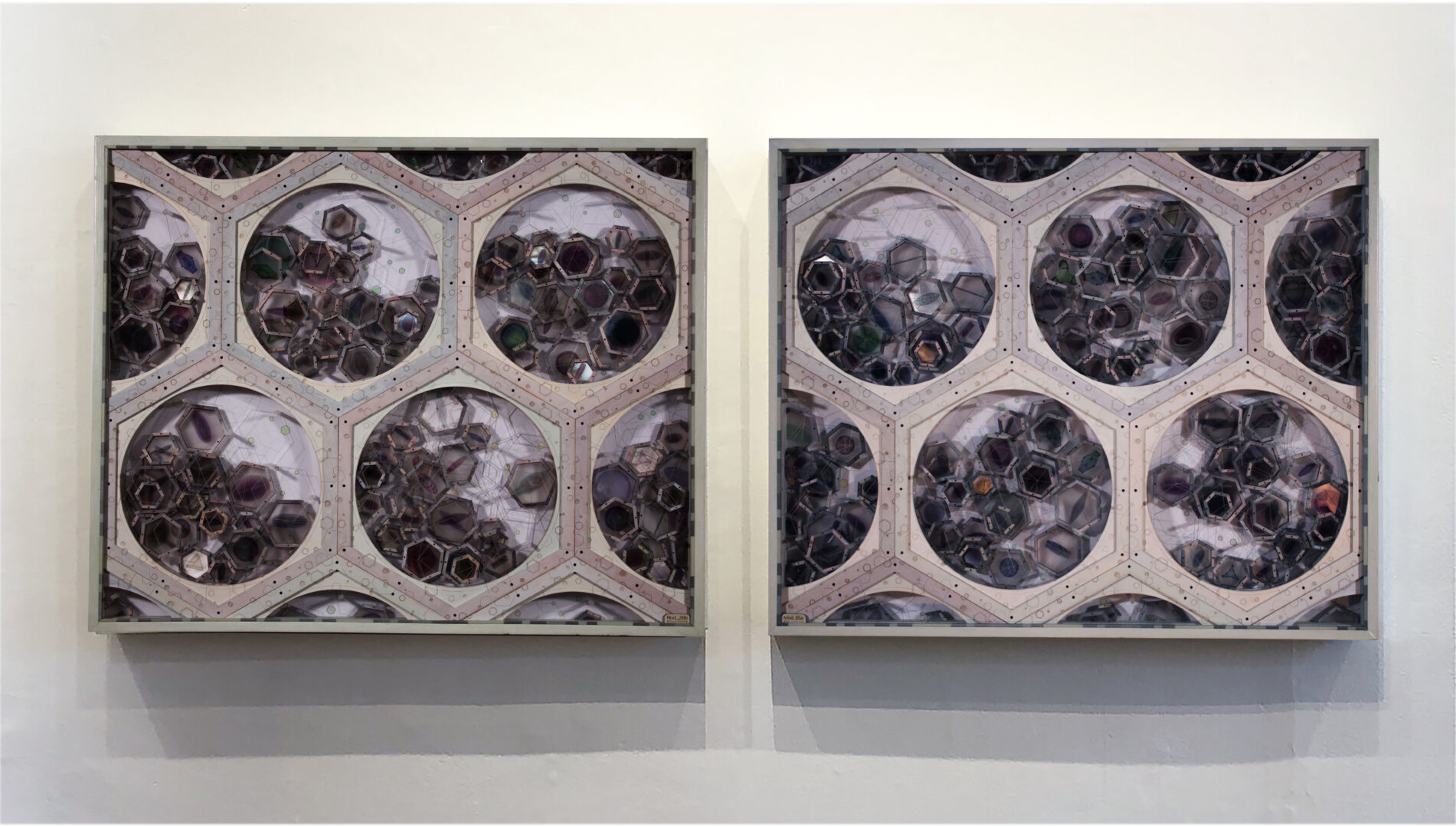
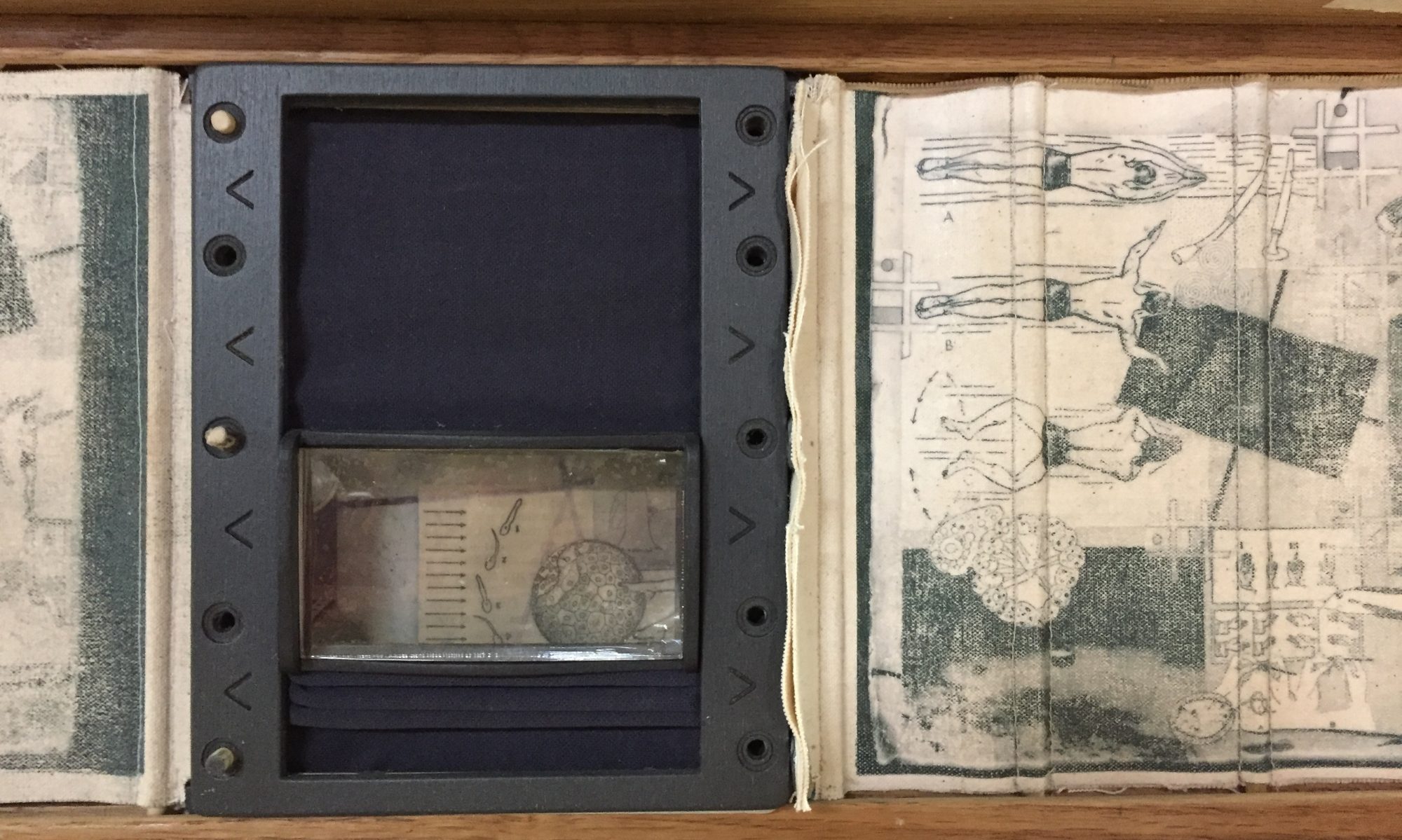
Materials: Wood, paper, lenticular prints, UV-filtering plexiglas, UV-protected matte medium
[~28.5″ x 60.0″ x 2.875” (as diptych)
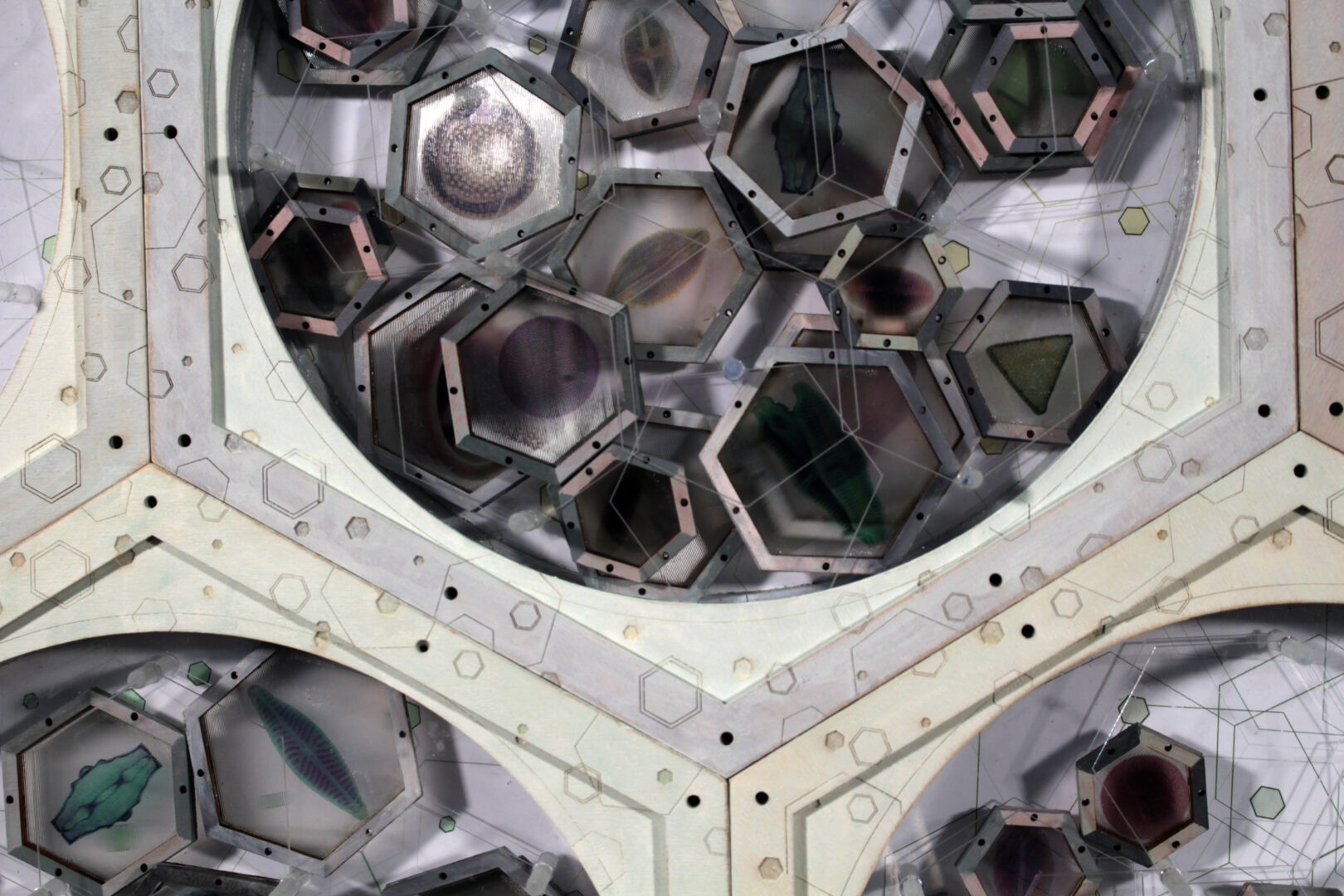
The work initially reads as a clean, almost minimalist set of lenticular panels, but it functions more like a macro-scale translation of diatomic microscopy—an experience that encourages sustained looking and an awareness of optical shift as the viewer changes position.
Its subject is diatoms: ubiquitous yet largely unseen organisms that are neither plant nor animal. The presentation draws attention to their intricate silica architecture—lattices and hexagonal substructures that, under magnification, reveal complex geometry and gemlike spectral refractions. The lenticular surface amplifies this quality through a subtle, shifting shimmer, reinforcing the idea that scientific structure can also be visually lavish.
The work’s diptych format provides a familiar, classical frame while suggesting a broader modular system. The exhibited elements read as scale-model subsets of a conceptually larger array, implying extension and recombination beyond the bounds of the two panels.
The project’s grounding in scientific research is made explicit through its collaboration with diatomists Dr. Marina Potapova and Alison Minerovic. Potapova’s taxonomy work (with over 900 species identified to date) and the electron-microscopic catalogs that informed the project supply a rigorous reference point, while the artwork maintains an accessible tone and avoids becoming purely illustrative.
Overall, the piece operates as an inviting, lightly playful prompt to re-consider a commonly overlooked life-form—bringing microscopic complexity into a legible, materially engaging encounter.